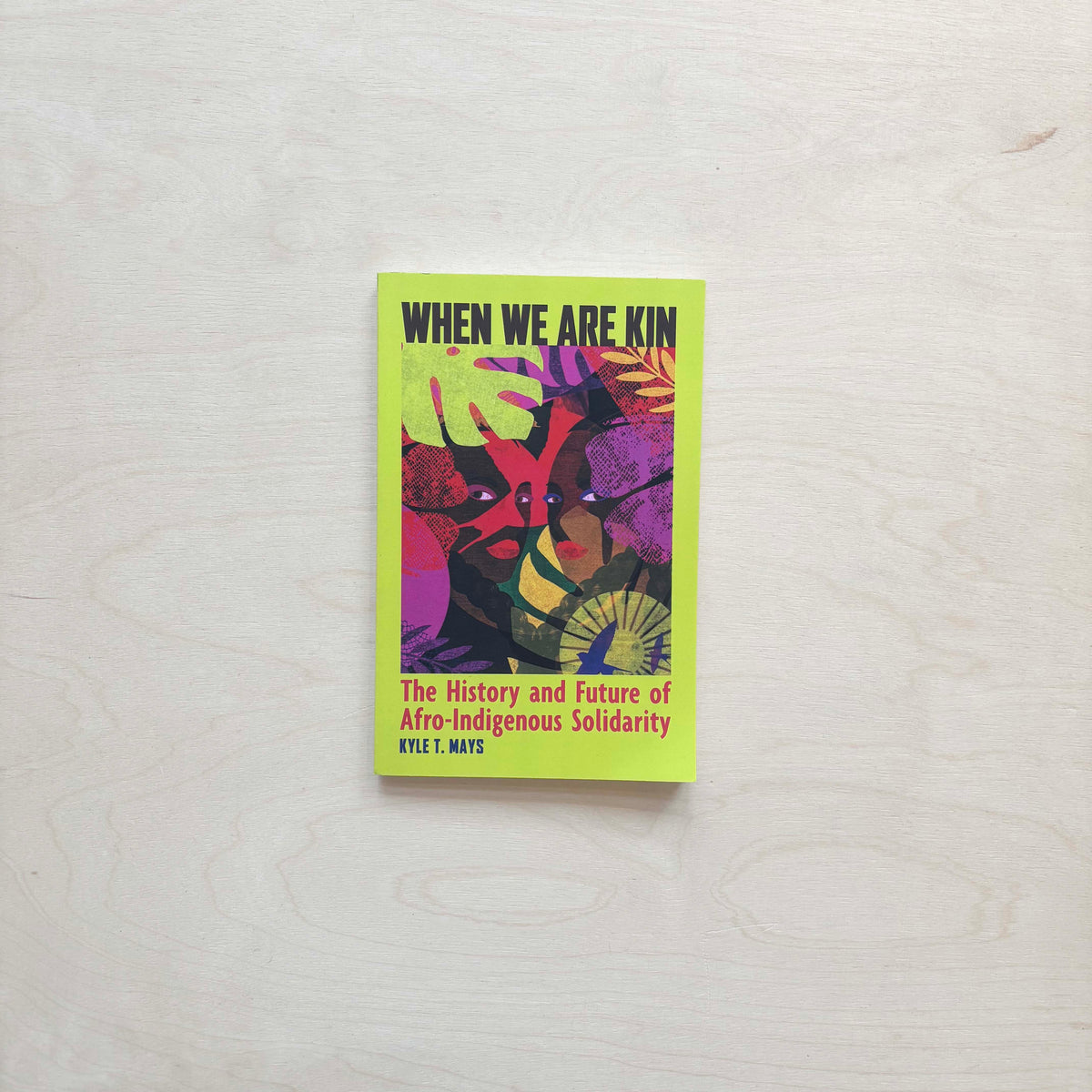
When We Are Kin - The History and Future of Afro-Indigenous Solidarity
When We Are Kin - The History and Future of Afro-Indigenous Solidarity
Kyle T. Mays
Haymarket Books
2026
9798888905968Softcover
19.8 x 12.8 x 1.4 cm
184 pages
Verfügbarkeit für Abholungen konnte nicht geladen werden
A bold vision for a Black and Indigenous future rooted in real solidarity, a future that exists beyond the confines of the liberal imagination
Current advocates of reparations for slavery and land back often fail to scrutinize racial capitalism and settler colonialism, instead accepting that their destinies will forever be tied to US empire. But as scholar Kyle T. Mays insists in When We Are Kin, we can and should demand a kind of repair that goes beyond a white supremacist idea of what justice can be.
In a series of short essays, Mays traces the history of alliances between Black and Indigenous movements; outlines the limitations of certain demands for reparations, including cash payments, that do not fundamentally critique racial-settler capitalism; and interrogates contemporary land back initiatives that fail to fully address decolonization. Along the way, he asks, What does solidarity look like between Black and Indigenous peoples in the United States? Can we find ways to co-belong and co-resist on Turtle Island?
Table of Contents
Introduction: Black Freedom And Indigenous Sovereignty
Chapter One: Black And Indigenous Movements For Justice: A Brief History
Chapter Two: Reparations And Its Discontents
Chapter Three: Land Back And Indigenous Claims To Urban Territory
Chapter Four: Toward Mino-Bimaadiziwin: Envisioning Black And Indigenous Co-Resistance And Co-Belonging
Kyle T. Mays is an Afro-Indigenous (Saginaw Chippewa) writer and scholar. He is a professor of African American studies, American Indian studies, and history at the University of California, Los Angeles, and the author or co-author of four books, including Rethinking the Red Power Movement (with Sam Hitchmough), City of Dispossessions: Indigenous Peoples, African Americans, and the Creation of Modern Detroit, An Afro-Indigenous History of the United States, and Hip Hop Beats, Indigenous Rhymes: Modernity and Hip Hop in Indigenous North America.
Drawing on the Anishinaabe philosophy of mino-bimaadiziwin (the good life), Mays argues that we can resist as kin only when we center the land in building our collective futures.